
Journal · Coffee
What the honey process actually does to your coffee
Washed, natural and honey coffees explained, and why the same farm can taste three different ways.
Coffee is the seed of a fruit. Before a green coffee bean can be roasted, everything around it has to come off: the skin, the sweet pulp, a sticky layer called mucilage and a papery shell called parchment. How a farm removes those layers, and when, is called processing. It shapes the flavor in your cup almost as much as the variety or the roast.
Washed coffees
In the washed process, the skin and pulp are stripped from the cherry right after picking. The beans then rest in water or tanks while the remaining mucilage breaks down, are washed clean and dried in their parchment. Washed coffees tend to taste clean and bright, with clear acidity and a lighter body. If you love a coffee that tastes like citrus or black tea, there is a good chance it was washed.
Natural coffees
In the natural process, the whole cherry is dried with the seed still inside, often for several weeks on raised beds or patios. The fruit stays in contact with the bean the entire time. Naturals tend to be heavier and sweeter, with jammy, winey or berry notes. Done carefully, they are spectacular. Done carelessly, the same fruit contact can turn ferment-heavy.
Honey coffees
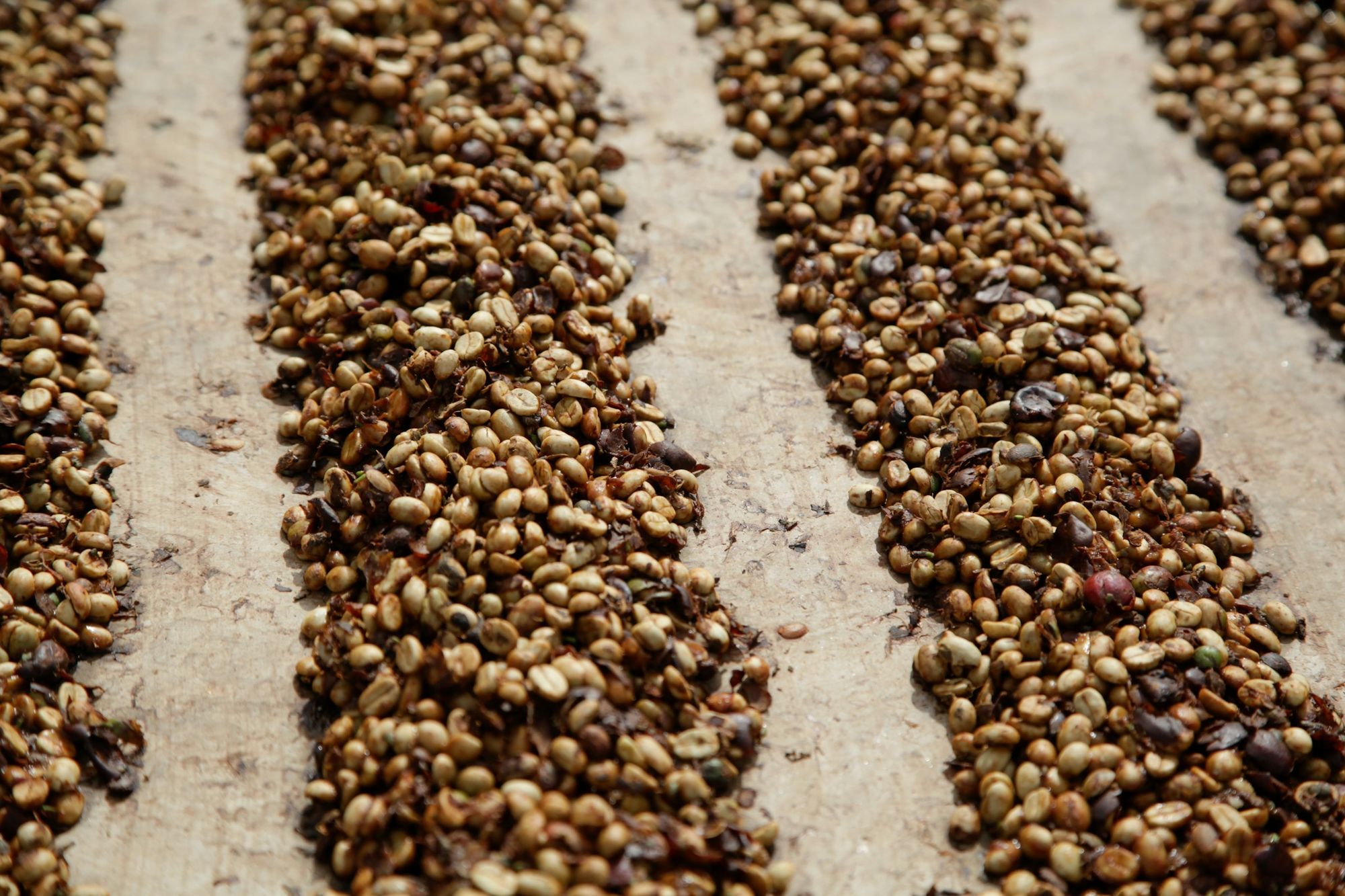
The honey process sits between the two. The skin and pulp are removed, but some or all of the sticky mucilage is left on the bean while it dries. Nothing is added; the name comes from how the mucilage feels, tacky like honey.
Producers often name honey coffees by color, which tracks how much mucilage is left and how slowly the coffee dries:
- Yellow honey: less mucilage and faster drying, usually in more sun. Closer to a washed coffee.
- Red honey: more mucilage and slower drying. Rounder sweetness and a fuller body.
- Black honey: the most mucilage and the slowest, most shaded drying. Closest to a natural, and the most demanding to get right.
Same farm, same variety, three different cups.
What to taste for
A red honey from Central America is a good place to start. Compared with a washed coffee from the same region, expect a softer acidity, a sweetness closer to brown sugar or stone fruit and a body that coats the tongue a little more. Brew both side by side, at the same recipe, and the difference is easy to taste.
Why it matters to us
Processing is labor. Honey and natural coffees need careful turning, protection from rain and close attention to moisture, and the farms that do it well deserve to be paid for that work. When we choose a coffee, the process is one of the first things we ask about. When Chocojava opens its first cafes in 2027, every bag will tell you how its coffee was processed, so you can find the style you like and go looking for more of it.
Next
The Journal