Journal · Sourcing
Why we pay more for cacao
Flavor is made at the farm, in the fermentation box and on the drying bed. That work is worth paying for.
Most of the world’s cacao is bought and sold as a commodity. The price is set on an exchange, and a farmer is paid mainly by weight. Under that system, a carefully fermented, slowly dried bean and a rushed one can earn nearly the same. The incentive is to produce more, not better.
Chocojava plans to buy differently, and to pay above commodity prices for cacao we source directly.
Where chocolate flavor comes from
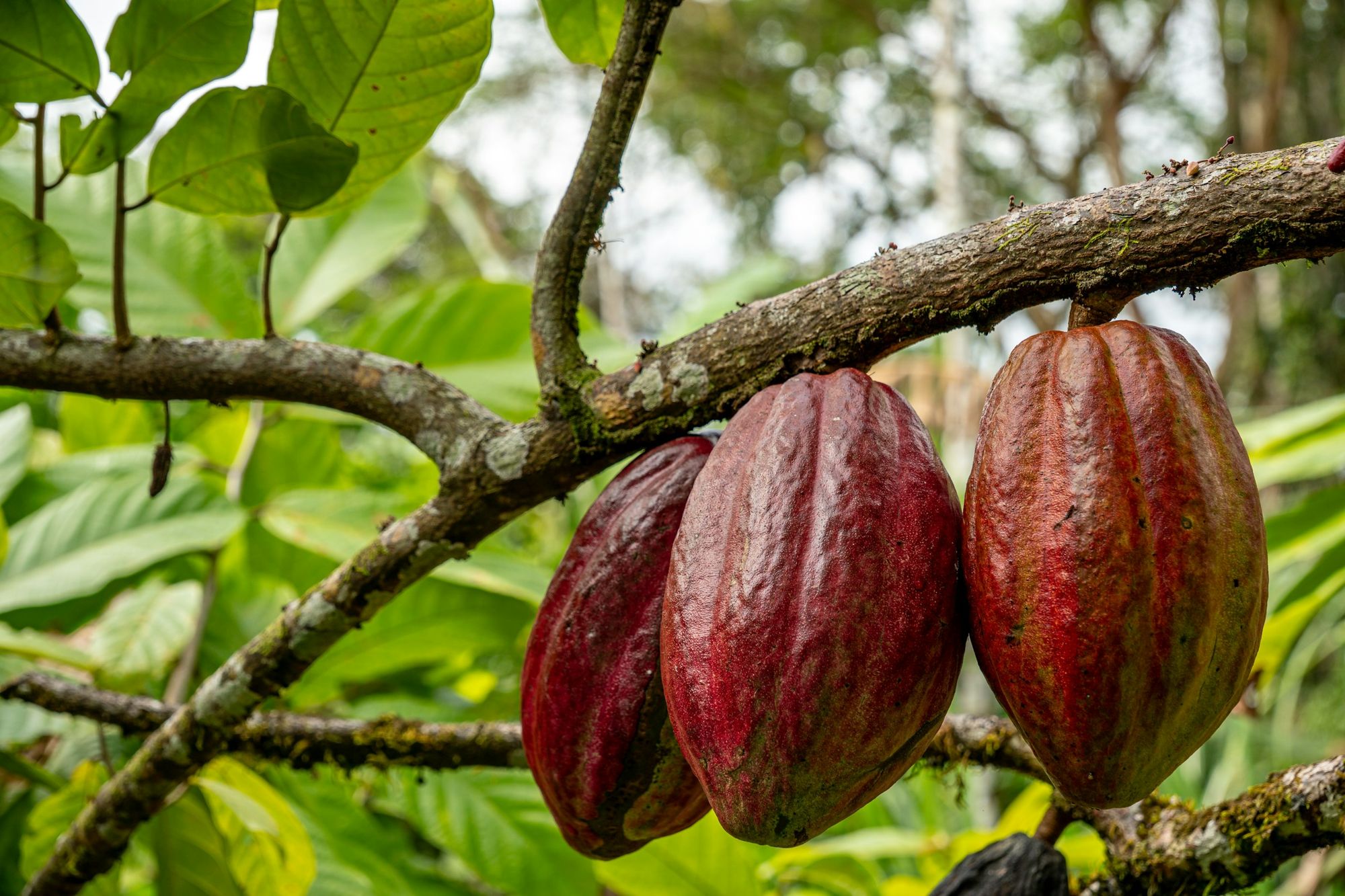
Fresh cacao seeds do not taste like chocolate. They are bitter and astringent, wrapped in sweet white pulp. The flavors we call chocolate are developed after harvest, in two steps that happen on or near the farm:
- Fermentation. The seeds and pulp are piled in wooden boxes or heaps and covered, usually for several days. Yeasts and bacteria break down the pulp, the heat rises, and chemical changes inside the seed create the precursors of chocolate flavor. Under-fermented beans taste flat and harsh; well-fermented beans taste complex.
- Drying. The fermented beans are spread out and dried, ideally slowly and evenly, until they are stable enough to ship. Drying too fast locks in acidity; drying too slowly invites mold.
No amount of skill in a chocolate workshop can put back flavor that was never developed at origin.
No amount of skill in the workshop can put back flavor that was never developed at origin.
What a higher price pays for
Fermenting and drying well takes infrastructure and time: proper fermentation boxes, covered drying beds, trained people and the patience to wait. Paying above commodity prices makes that investment worth a farmer’s while. Paying it consistently, under multi-year agreements, lets a cooperative plan for it.
Chocojava plans direct-trade relationships for cacao in Ecuador, Peru, Madagascar and São Tomé, multi-year price agreements, and a share of our annual cacao and green coffee purchasing set aside for origin programs such as agronomist visits and processing upgrades.
Why it shows in the bar
A single-origin bar is only as interesting as its beans. Cacao from Madagascar often tastes bright and red-fruited; cacao from Ecuador can lean floral or nutty. Those differences survive into the finished bar only when the beans were fermented and dried with care. That is the flavor we want to put in your hands, and the reason we will gladly pay for it.
Our first cafes, and the first bars from our own bean-to-bar workshop, are planned for 2027.
Next
The Journal